Knowledge Hub
GCERF is uniquely positioned to translate community-level learning into knowledge that shapes the global response to violent extremism and terrorism. Our knowledge products draw evidence directly from programmes implemented by civil society organisations in the most remote and fragile contexts, offering insights grounded in reality.
Latest content
-
Podcast
Learning, Earning and Belonging: Pathways to Reintegration
In this episode of Turning Points, host Basile Ema Ebede, GCERF’s Regional Manager for South-East Asia, is joined by Aisah Ponce Macabuat, Project Manager at ECOWEB Philippines, to explore how education, vocational training and livelihood development can support rehabilitation and reintegration.
Listen to episode → -
Report
Mental Health and Psychosocial Support in Rehabilitation and…
Recommendations on integrating MHPSS into R&R programmes, drawing on country-level experiences and practical lessons.
Read report → -
Podcast
The Role of Faith Leaders and Youth in Deradicalisation and…
Faith leaders can be among the most trusted people in a community. But what happens when that trust is brought into the work of rehabilitation and reintegration? In this episode of Turning Points, host Samhita Ayaluri explores how faith leaders and youth actors can contribute to preventing violent extremism, and building stronger, more resilient communities.
Listen to episode → -
Story
From Football Fields to Safe Spaces: Building Youth…
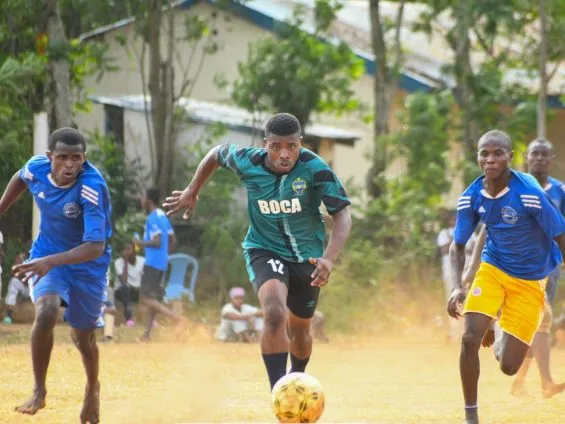
In Garbatulla Sub-County, Isiolo, at-risk youth once had nowhere to turn – No structured support to protect them from the pull of violent extremism. That began to change when RPPL’s GCERF-supported SIRR programme found a powerful ally in Abduba, a respected youth leader and chairperson of the local football federation.
Read story → -
Story
Breaking the Cycle of Violent Extremism: Daina’s Story of…
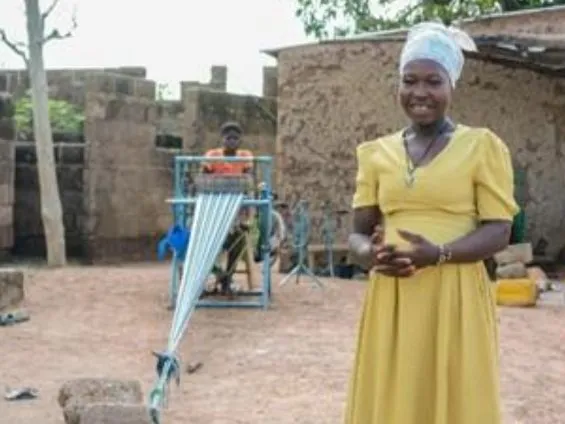
In 2024, STAR Ghana Foundation taught Daina weaving along with market skills, digital literacy, and ways to prevent violent extremism, while a village savings group helped her manage her money.
Read story → -
Article
Recalibrating Security-Community Relations: for the…
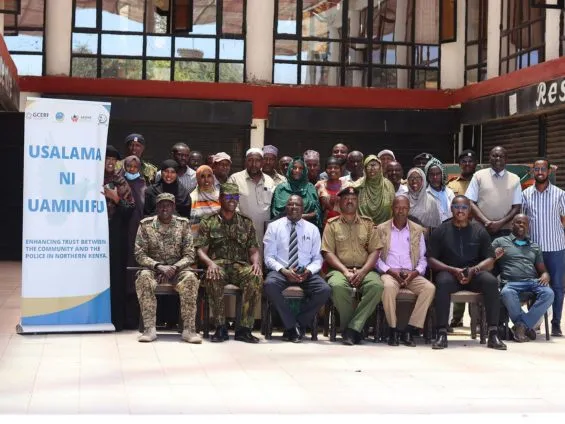
Mohamedamin Issack, Samhita Ayaluri
Read story → -
Podcast
The Legal Path Home: International Law and The Challenges of…
Before rehabilitation and reintegration can begin, there is a fundamental question: who has the right to return? In this episode of Turning Points, host Basile Ema Ebede, GCERF’s Regional Manager, is joined by Aoife Devlin, a law and politics graduate from University College Dublin. Together they examine the legal challenges surrounding the repatriation of ‘foreign terrorist fighters’ and their families from Northeast Syria — exploring the role of international law, citizenship, and state responsibility.
Listen to episode → -
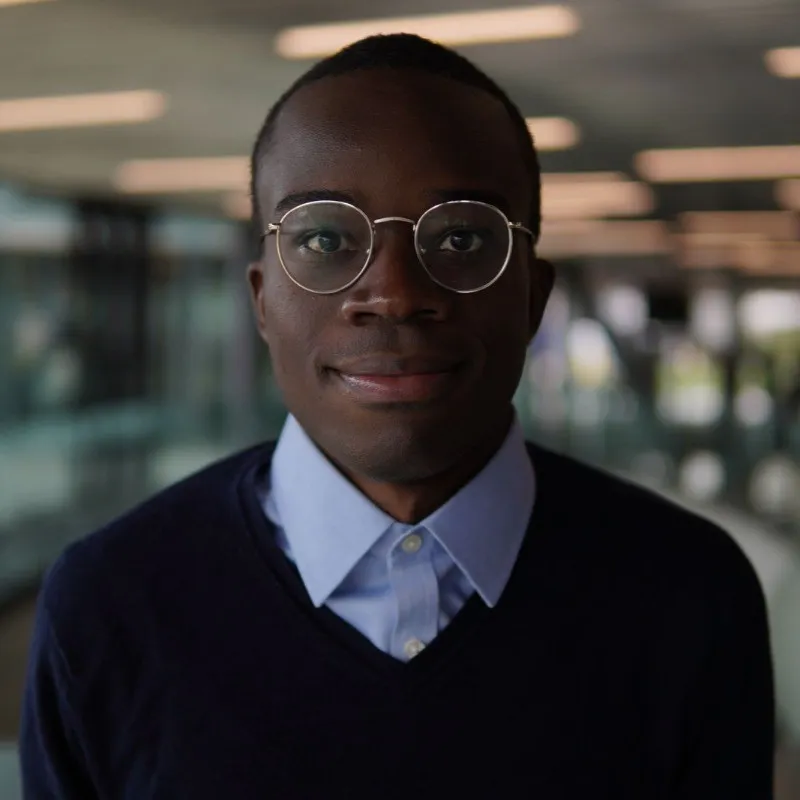
Press release
In Loving Memory: Claude-Emmanuel Hiol
It is with profound sadness that GCERF announces the passing of Claude-Emmanuel Hiol, who joined GCERF in 2025 and passed away in an accident. Claude-Emmanuel was working as an intern within the Sahel portfolio, supporting grant management activities in Mali. He was a valued member of the GCERF family, and his loss is felt deeply by all who knew him.
Read story → -
Story
Restoring Trust in Community-led Peacebuilding in Ghana
In Bussie, Ghana, the GCERF-supported STRIVE programme, implemented by NORSAAC, facilitated community dialogues that strengthened trust and collaboration among residents. By creating space for shared decision-making, the initiative helped make local peacebuilding more inclusive and gave greater recognition to diverse voices.
Read story →
Our work
55 results
-
Podcast
Learning, Earning and Belonging: Pathways to Reintegration
In this episode of Turning Points, host Basile Ema Ebede, GCERF’s Regional Manager for South-East Asia, is joined by Aisah Ponce Macabuat, Project Manager at ECOWEB Philippines, to explore how education, vocational training and livelihood development can support rehabilitation and reintegration.
Listen to episode → -
Report
Mental Health and Psychosocial Support in Rehabilitation and…
Recommendations on integrating MHPSS into R&R programmes, drawing on country-level experiences and practical lessons.
Read report → -
Podcast
The Role of Faith Leaders and Youth in Deradicalisation and…
Faith leaders can be among the most trusted people in a community. But what happens when that trust is brought into the work of rehabilitation and reintegration? In this episode of Turning Points, host Samhita Ayaluri explores how faith leaders and youth actors can contribute to preventing violent extremism, and building stronger, more resilient communities.
Listen to episode → -
Story
From Football Fields to Safe Spaces: Building Youth…
In Garbatulla Sub-County, Isiolo, at-risk youth once had nowhere to turn – No structured support to protect them from the pull of violent extremism. That began to change when RPPL’s GCERF-supported SIRR programme found a powerful ally in Abduba, a respected youth leader and chairperson of the local football federation.
Read story → -
Podcast
The Legal Path Home: International Law and The Challenges of…
Before rehabilitation and reintegration can begin, there is a fundamental question: who has the right to return? In this episode of Turning Points, host Basile Ema Ebede, GCERF’s Regional Manager, is joined by Aoife Devlin, a law and politics graduate from University College Dublin. Together they examine the legal challenges surrounding the repatriation of ‘foreign terrorist fighters’ and their families from Northeast Syria — exploring the role of international law, citizenship, and state responsibility.
Listen to episode → -
Story
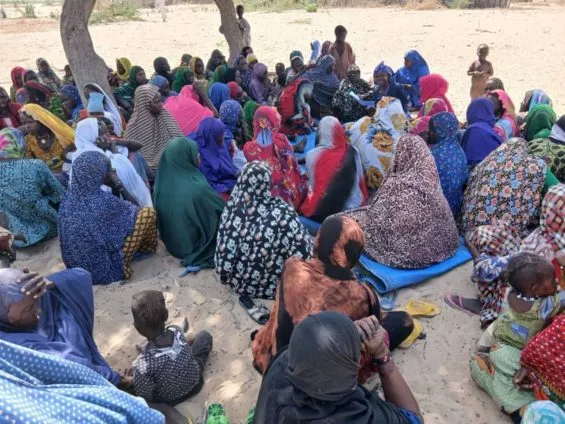
Women Advancing Peaceful Change in Lake Chad Region
In Lake Chad’s region, a GCERF-supported project implemented by a local CSO consortium led by Ligue Tchadienne des Droits de l’Homme (LTDH) strengthened women’s participation in local governance by creating opportunities for dialogue, advocacy, and constructive engagement with authorities.
Read story → -
Story
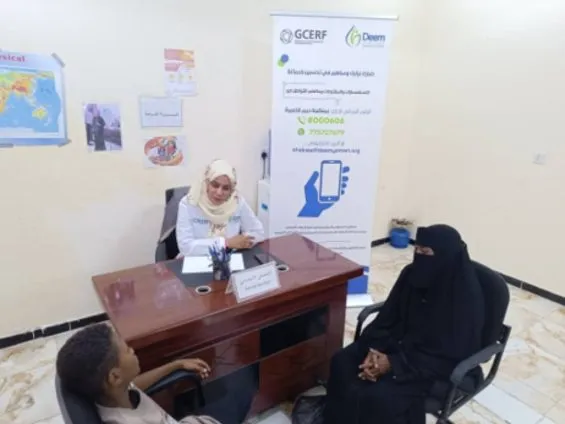
Rebuilding a Future: A Child’s New Beginning in Aden
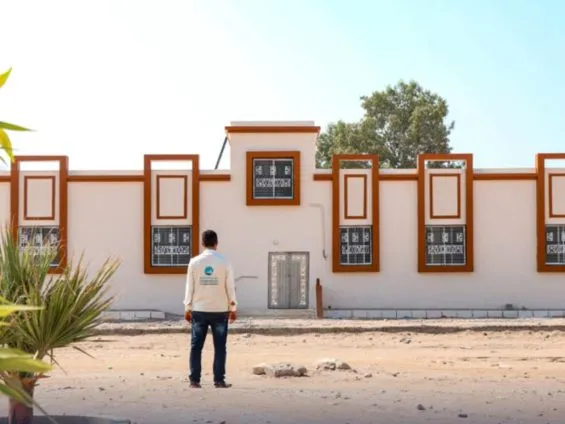
In early 2026, a GCERF-supported child protection intervention through ‘Deem For Development’ in Aden Governorate, Yemen, helped a vulnerable adolescent move from detention toward reintegration—providing psychosocial support, family assistance, and vocational guidance to rebuild trust, resilience, and hope for the future.
Read story → -
Story
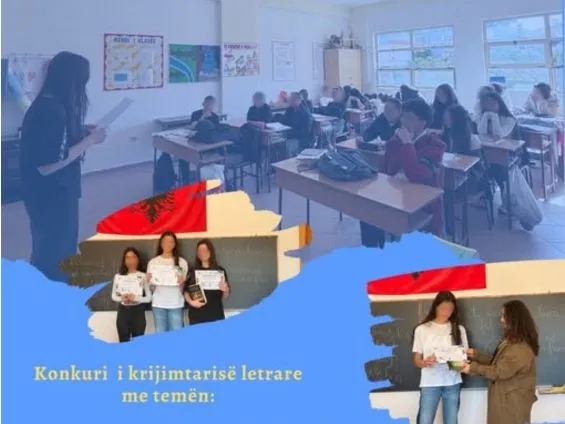
Finding His Voice: A Youth-Led Stand Against Online Hate
As part of the project “Empowering Youth Resilience through Human Rights Education and Prevention of Violent Extremism (PVE)”, implemented in rural Kavaja (June 2025–February 2026), a notable change emerged through the experience of Ardi, a 17-year-old secondary school student.
Read story → -
Story
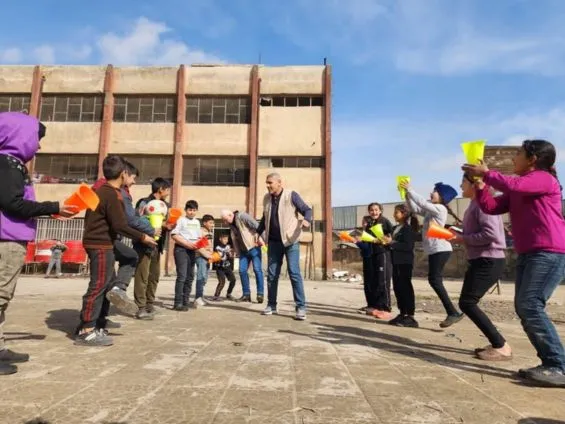
A Child’s Path to Recovery: Aran’s Story
In Northeast Syria, GCERF’s investment partner, Salam for Hope Foundation, mobilised its team and resources as part of an emergency response to the mass displacement of people from conflict-affected areas in Aleppo, Raqqa, and Deir ez-Zor. The response also worked to strengthen local communities in preparation for future reintegration cases — reflecting GCERF’s whole-of-society approach to Preventing Violent Extremism (PVE).
Read story → -
Story
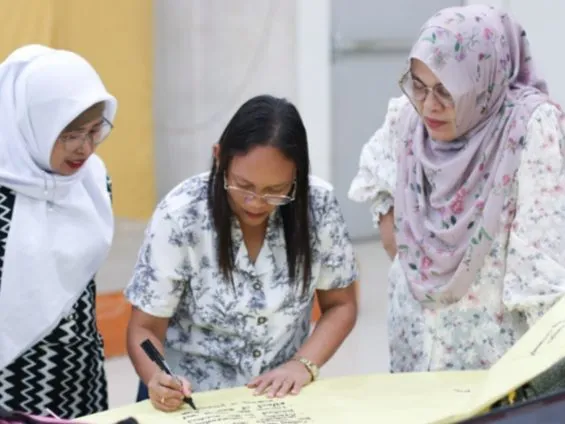
Bridging Narratives: A Story of Cultural Understanding
Through the Teach Peace Build Peace Movement (TPBPM), the Bangsamoro Gallery Exhibit is creating space for dialogue and cultural exchange between Bangsamoro youth and university students in the Philippines.
Read story → -
Story
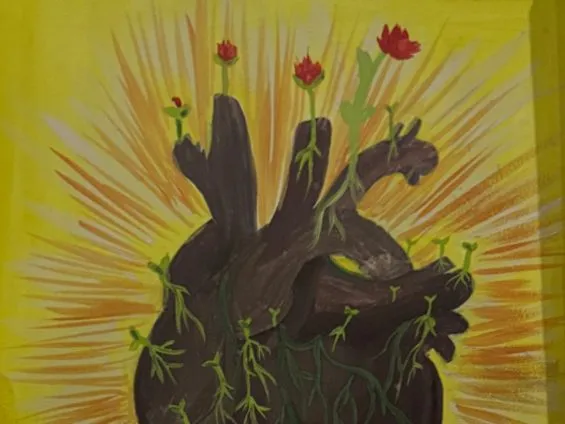
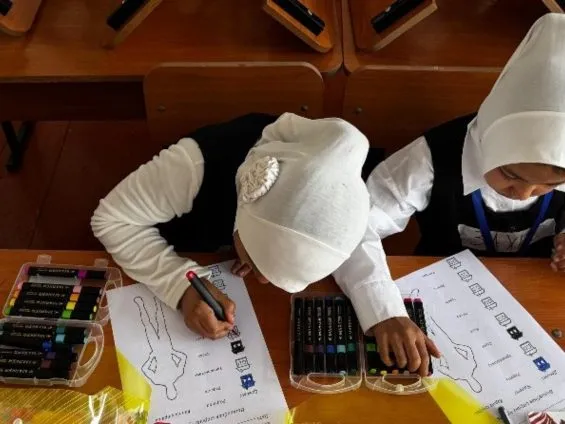
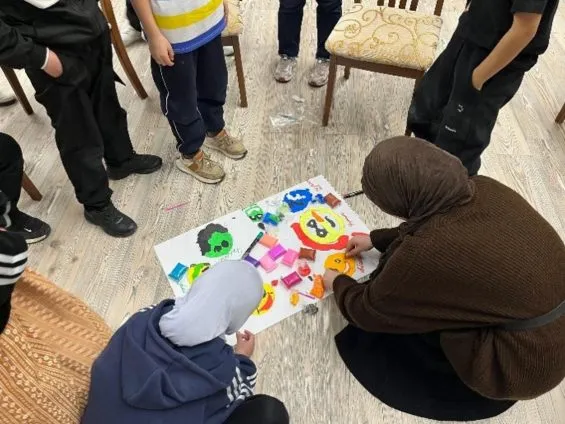
When Healing Looks Like a Drawing
Through GCERF-supported MHPSS activities implemented by SOS Children’s Village in Kyrgyzstan, returning children from Northeast Syria are provided with safe spaces to express emotions, strengthen resilience, and rebuild a sense of belonging through creative approaches such as art-based therapy.
Read story → -
Story
Supporting school reintegration In Issyk-Kul
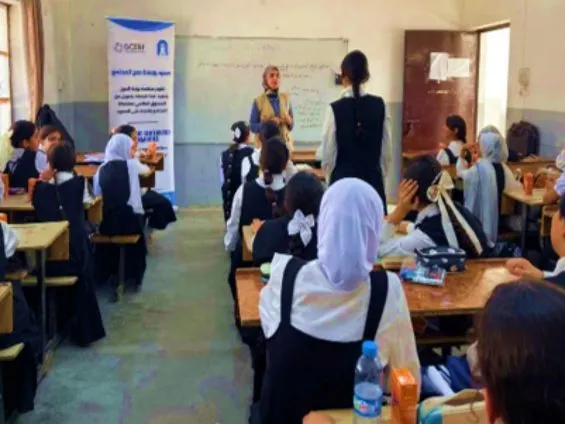
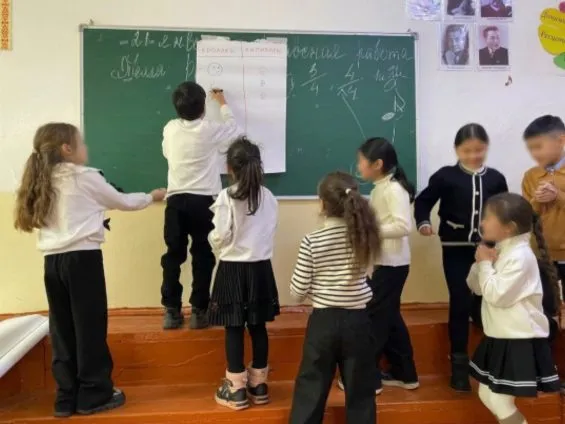
Targeted educational, language, and psychosocial assistance has enabled three returned children in the Issyk‑Kul region to enter school, overcome language barriers, and integrate into their local community.
Read story → -
Story
Strengthening Resilience among women returnees
Targeted psychosocial and life skills support is helping a young woman repatriated from Iraq strengthen her understanding of rights, build trust, and plan for a more stable future for herself and her family.
Read story → -
Story
Amal’s Journey of Resilience and Independence
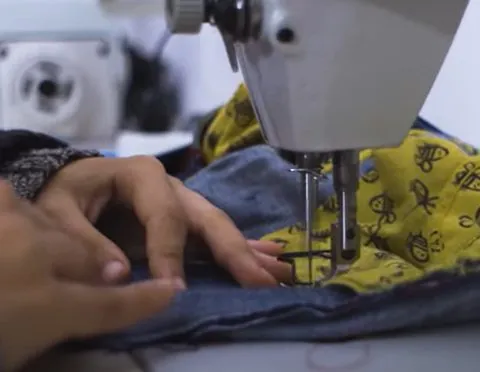
In early 2026, GCERF, through its partner Dream Organisation, supported a sewing vocational training programme in Anbar for people returning after years of displacement and uncertainty. The programme equips participants with practical skills to build small, sustainable businesses from home, turning hardship into hope and helping rebuild a more stable future for themselves and their families.
Read story → -
Story
Sahib Bisnis: A Pathway to Livelihood Stability
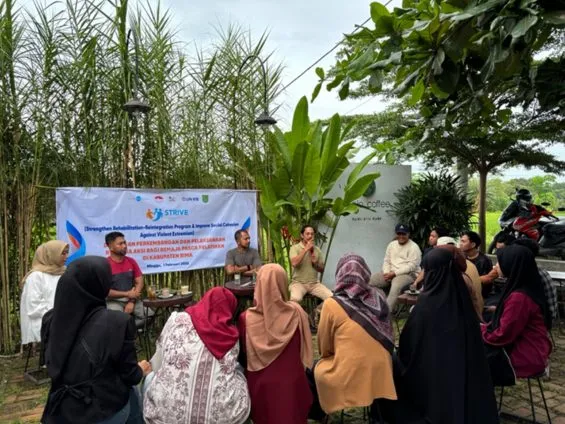
In early 2026, NPID supported the reintegration of a former detainee in Tamanjeka, Indonesia, through the Sahib Bisnis programme, combining vocational training, business capital, and ongoing mentoring to help him build a sustainable livelihood, strengthen community ties, and turn economic vulnerability into a pathway towards stability and self-reliance.
Read story → -
Story
Supporting returnee children in Kyrgyzstan
In Nookat District, Osh Region, a quiet but powerful transformation took shape, implemented by SOS Children’s Villages Kyrgyzstan with support from GCERF, as part of efforts to strengthen family stability and prevent violent extremism in vulnerable communities across Kyrgyzstan.
Read story → -
Story
Back to School: Restoring Hope in Aden
In Tawahi District, Aden, a remarkable transformation unfolded under the Social Justice Project, implemented by the Social Services Association and supported by Deem for Development as Yemen’s “Torchbearer” of the GCERF Carol Bellamy Leadership Award.
Read story → -
Story
Bilel’s Journey: Building Resilience
Growing up in a family living in extreme poverty, with a father living with a disability and no stable income, Bilel took on daily labour from a young age to help meet basic needs. In this fragile environment, he became vulnerable to the influence of an extremist group that gradually undermined his beliefs and sense of balance.
Read story → -
Story
Zainab’s Journey: From Trauma to Determination
Through its Mental Health and Psychosocial Support (MHPSS) programme in Iraq, IID, with GCERF’s support, accompanied Zainab’s journey from displacement and exclusion toward healing and opportunity — helping her overcome trauma, return to formal education after an 11 year interruption, and reclaim her dream of becoming a doctor.
Read story → -
Report
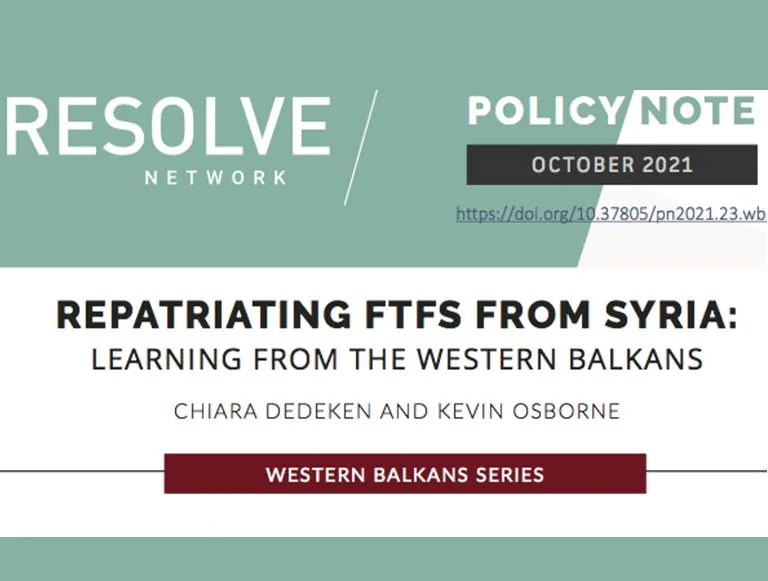
Legal Frameworks on Returning 'Foreign Terrorist Fighters'…
Explores international and domestic legal approaches to the repatriation of FTFs from camps in Syria.
Read report → -
Story
From Surrender to School: Sourbadjo’s Story
In 2023, GCERF launched the PAISRSIP project in Niger to support the demobilisation and reintegration of former members of non-state armed groups and their families — turning surrender into a pathway for education, livelihoods, and renewed hope.
Read story → -
Podcast
The Journey to Healing: Mental Health and Psychosocial…
Mental health and psychosocial support is one of the most important aspects of rehabilitation and reintegration. In this episode of Turning Points, host Isabela Ottoni is joined by three guests who bring very different perspectives. Together they explore why trust is the foundation of everything and why some of the most important mental health work is done not by psychologists alone but also by teachers, faith leaders, and neighbours.
Listen to episode → -
Podcast
The Journey Before the Journey
In this episode, GCERF's Mona El-Wali is joined by Kim Saado, GCERF's National Advisor for Syria, and Jeyana Ahmad, Programme Manager at Salam for Hope Foundation, GCERF's implementing civil society partner in Syria, to explore a critical and often unseen moment in the rehabilitation and reintegration process: the time before a family leaves a camp in northeast Syria. They discuss what pre-departure preparation really means in practice, and the psychological, legal, and practical steps that must happen before return.
Listen to episode → -
Report
Building Trust in Rehabilitation and Reintegration through…
Recommendations on how Communications can help build trust and transparency in R&R.
Read report → -
Podcast
Rehabilitation and Reintegration in Iraq, Syria, and Yemen —…
In the first episode of Turning Points, GCERF's Lilla Schumicky-Logan, Deputy Executive Director, sits down with Hatem Shatnawi, Regional Manager for Iraq, Syria and Yemen, and Tariq Hasan, National Advisor for Iraq, to discuss what rehabilitation and reintegration really looks like on the ground, the challenges of working in conflict-affected settings, and why community-led approaches are essential.
Listen to episode → -
Press release
Международные партнеры дополняют усилия Узбекистана по…
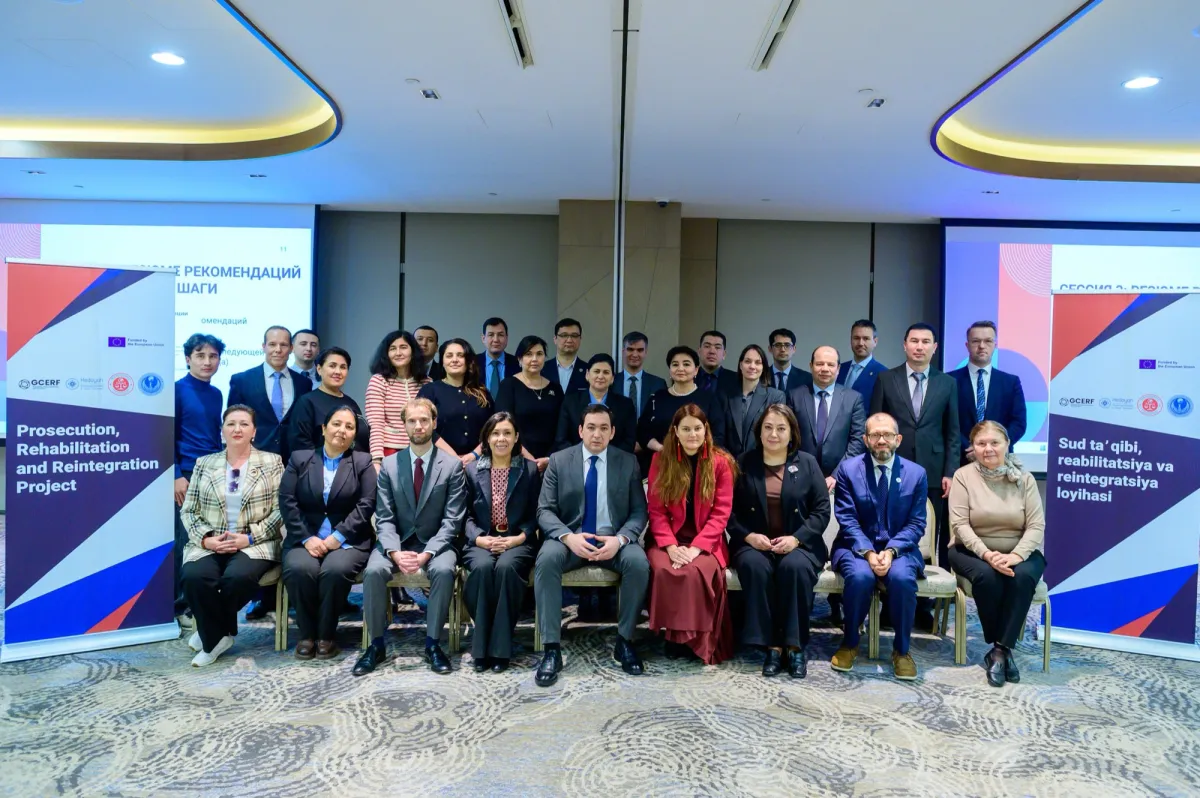
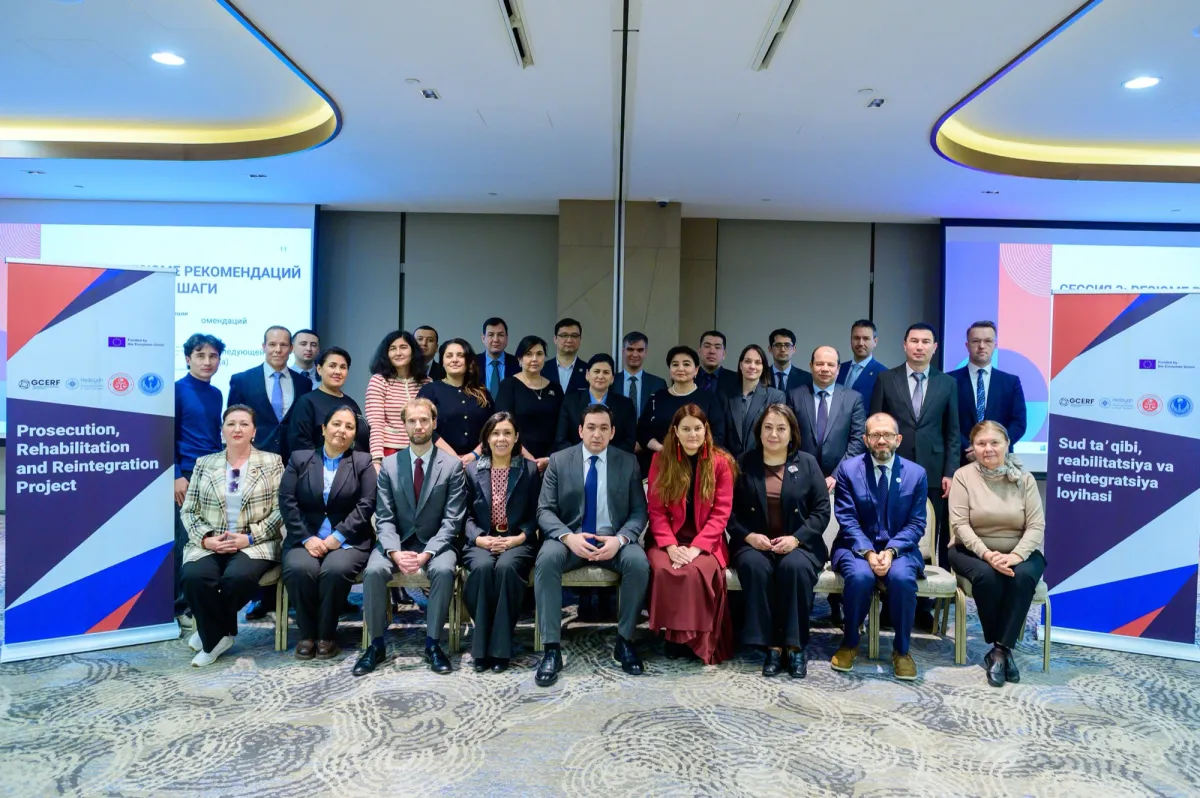
Узбекистан укрепляет свои возможности по безопасной реинтеграции лиц, возвращающихся из зон конфликта, с финансовой и стратегической поддержкой Европейского Союза через его Службу инструментов внешней политики (FPI). Трехлетняя программа «Уголовное преследование, реабилитация и реинтеграция» (PRR) ориентирована на возвращенцев из Ирака и северо-восточной Сирии…
Read story → -
Press release
International Partners Strengthen Uzbekistan’s…
Uzbekistan is strengthening its capacity to safely reintegrate individuals returning from conflict zones, with financial and strategic support from the European Union through its Foreign Policy Instrument (FPI). The three-year Prosecution, Rehabilitation, and Reintegration (PRR) program me focuses on returnees from Iraq and Northeast Syria…
Read story → -
Story
From Fear to Freedom: Rebuilding Life After Extremism
Hadjiya, 39, is a mother of six from Niamey, Niger. At 18, she moved to Diffa to live with her sister, married to a police officer. There, she met the man who would become her husband. He appeared wise and well connected, with business partners in Chad, but she knew little about his real activities.When Boko Haram’s influence surged in Diffa, Hadjiya discovered the truth: her husband was a member of the extremist group. By then, it was too late for her to leave safely. As authorities intensified efforts to identify those linked to violent extremist networks, her husband persuaded her to follow him to a forest near Lake Chad to join a local Boko Haram leader.Hadjiya spent eight difficult years living under constant threat, from security operations to rival factions. Life was extremely precarious: no clean water, no healthcare, little food. She witnessed the deaths of many pregnant women due to the absence of medical support. Her mother-in-law repeatedly urged them to return home, but her husband refused.When the Nigerien government announced an amnesty for those who voluntarily surrendered, her husband finally agreed to escape. The family fled together, but on the way, they were intercepted by fighters, who kidnapped one of their daughters. Her husband fled to Nigeria, while Hadjiya managed to return to Diffa with her remaining children, where they were received by the authorities and enrolled in the GCERF-funded PAISRSIP programme.Through the project, Hadjiya participated in judicial profiling, deradicalisation sessions, and psychological support, crucial steps in rebuilding trust, resilience, and social reintegration. After receiving her certificate of exemption from prosecution, she and other former associates of extremist groups were supported to restart their lives through tailored income-generating activity kits and career guidance.Hadjiya chose to launch a ready-to-wear clothing business. Today, her enterprise has grown steadily, enabling her to earn a reliable income and diversify into selling incense and food near the Diffa Governor’s Office. She now saves regularly and contributes to a neighbourhood tontine of 20,000 CFA francs each month.Hadjiya’s journey shows the transformative impact of community-based reintegration and preventing violent extremism (PVE) support. With stability, economic opportunity, and tailored psychosocial assistance, she and her children have rebuilt their lives and broken the cycle of violent extremism.
Read story → -
Report
The Cubs of the Caliphate: Why Repatriation and…
The article presents an overview of the situation in the camps, drawing on GCERF's work and experience.
Read report → -
Story
The Cubs of the Caliphate Live on (Syria)
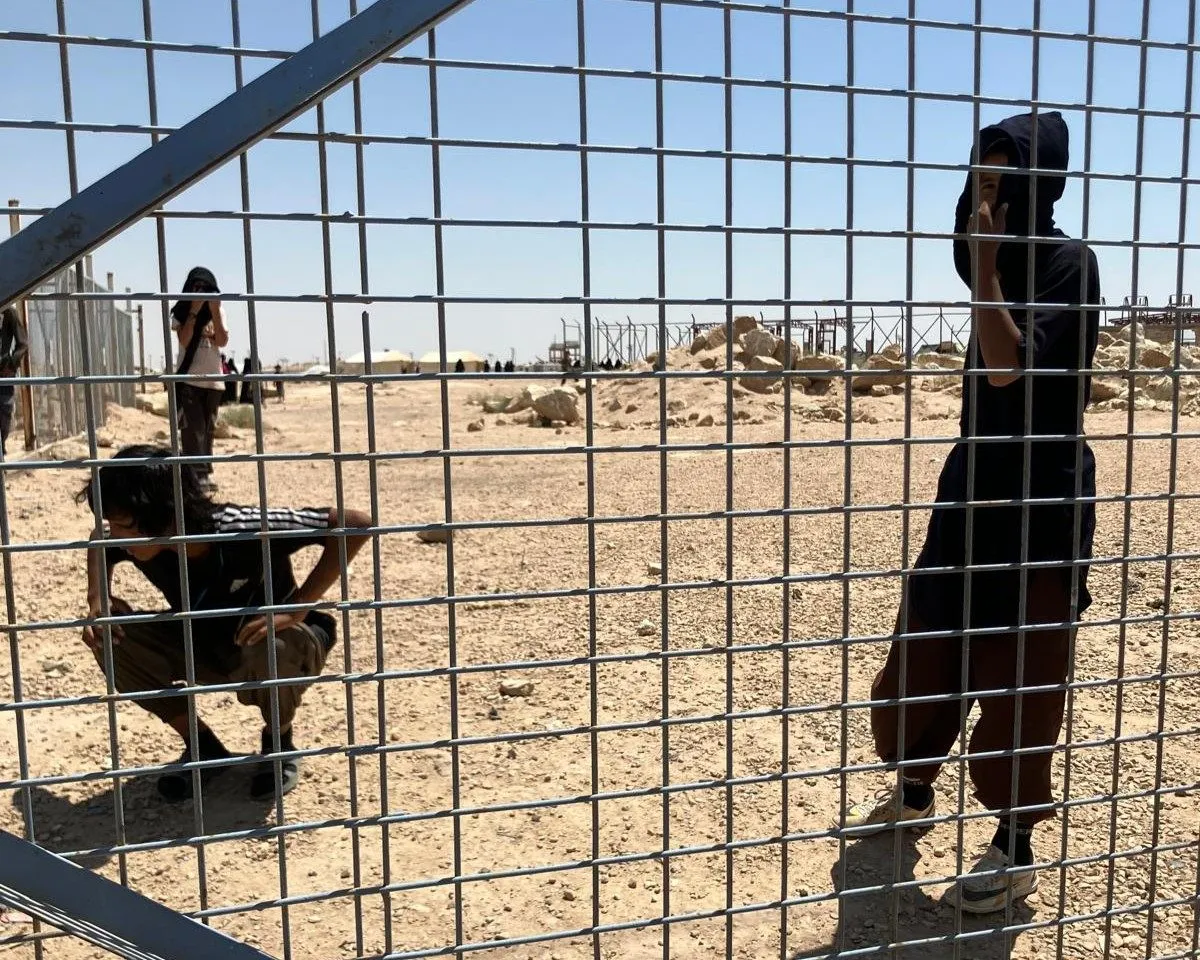
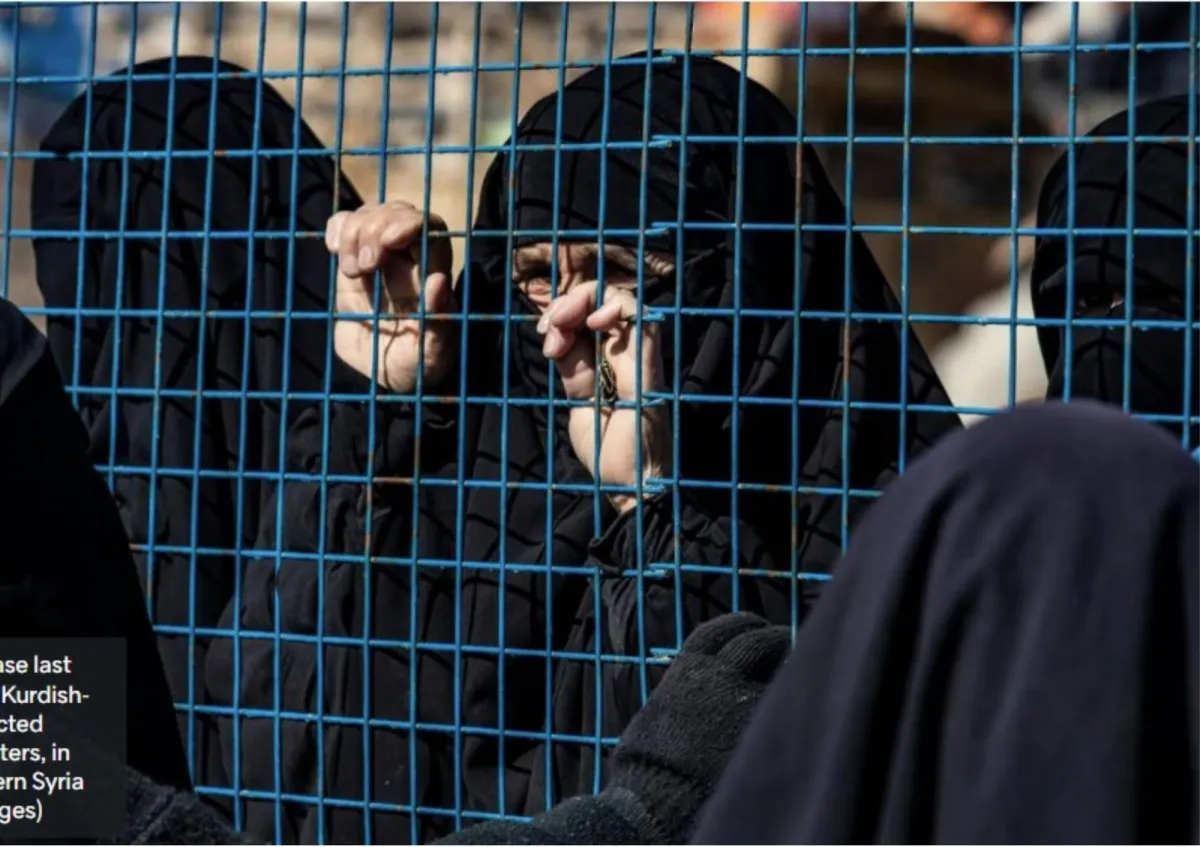
I climbed in and out of our van to pass through the eight checkpoints that led to Al Hol, the notorious camp where women and children associated with the deadliest terror group, ISIS, are detained. The environment is unkind. It is situated in a stone desert far from any bigger urban settlement. The landscape is occasionally dotted with oil pumps and has no vegetation. At 11 AM, the temperature soars to 52 degrees Celsius, no shade, just dust and blazing sun.The many kilometres-long white-blue fence appears from far. I notice the first women who are covered head to toe, including gloves, thick black abayas, and full-face veils, battling with the elements of Mother Nature. It is hard to breathe, and dust fills our lungs as we descend to meet the camp administration. Few know, but in Syrian Kurdistan, civil servant leadership positions are shared between men and women, and as such, they co-lead. Clearly, they take gender equity seriously.
Read story → -
Story
Jamil’s Story: A Father’s Commitment to His Children’s…
Jamil, a father of six, returned to West Mosul carrying the emotional and economic weight of years spent in displacement. His journey took him and his family through Al-Hol and Al-Jada camps, spaces often associated with trauma, deprivation, and the lingering legacy of the Islamic State in Iraq and Syria (ISIS) control.
Read story → -
Story
Restoring Family Bonds and Preventing Vulnerability…
Murad, a 15-year-old boy from rural Siliana, Tunisia, grew up amid loss and hardship. After his mother’s death, he became the sole caregiver for his ill grandfather, shouldering responsibilities far beyond his years. Isolated and emotionally strained, his relationship with his father broke down, leading to emotional neglect and eventually dropping out of school.
Read story → -
Story
The story of Yusuf, A Former Boko Haram fighter (Niger)
Yusuf, a 22-year-old individual from the commune of Bosso in Niger became a Boko Haram fighter at a very young age and lived with the group for over 10 years.
Read story → -
Story
New Beginnings After Conflict: A Returnee Mother Rebuilds…
In November 2024, a 47-year-old Kyrgyz woman was repatriated from Syria after spending seven harrowing years in a conflict zone, including time in detention. She returned to Kyrgyzstan with her five biological sons (aged 20, 12, 10, 9, and 8) and her 16-year-old niece, seeking a fresh start after enduring profound personal loss and trauma.
Read story → -
Report
Working with Returnees from Northeast Syria and Iraq
Recommendations to practitioners and partner governments interested in pursuing reintegration processes.
Read report → -
Story
Rebuilding Lives Beyond the Camps in Syria
One afternoon in the month of April 2025, I had lunch with three boys who were born eight years ago in the Al-Hol camp in Northeast Syria. Al-Hol camp is a dire and bleak place where thousands of family members of the Islamic State in Iraq and Syria (ISIS) fighters live. Their mothers come from Yathrib, the last town in Iraq to be overtaken by ISIS and the first town to be liberated.
Read story → -
Story
From a camp in Syria to a classroom in Iraq: Praa’s journey
While some would label her as a “Daesh kid”, 17-year old Praa’s story is one of justice, empathy, personal connection, hope and resilience. I met Praa during a visit to GCERF-supported reception centre for returnees in Balad, Iraq. I travelled there to see firsthand how our civil society partners are helping Iraqis who have returned from detention camps in Northeast Syria.
Read story → -
Story
Peace Ambassadors to Rebuild Trust and Restore Hope
In Mozambique, a few women and youth had to abandon their villages and community because of violent extremist groups. Maria is one such person who left her community, as she had to bear the consequences of her sons joining violent extremist groups.
Read story → -
Story
Meet Nurjamal
“Every child is unique, with their own dreams and needs. Reintegrating them into society is a social priority and a preventive measure against violent extremism. We must work with the community to create sustainable solutions to support these children and break the cycle of stigma” says Nurjamal when asked about her vision and the impact of her work.
Read story → -
Press release
GCERF Expands Partnerships for Prevention of Violent…
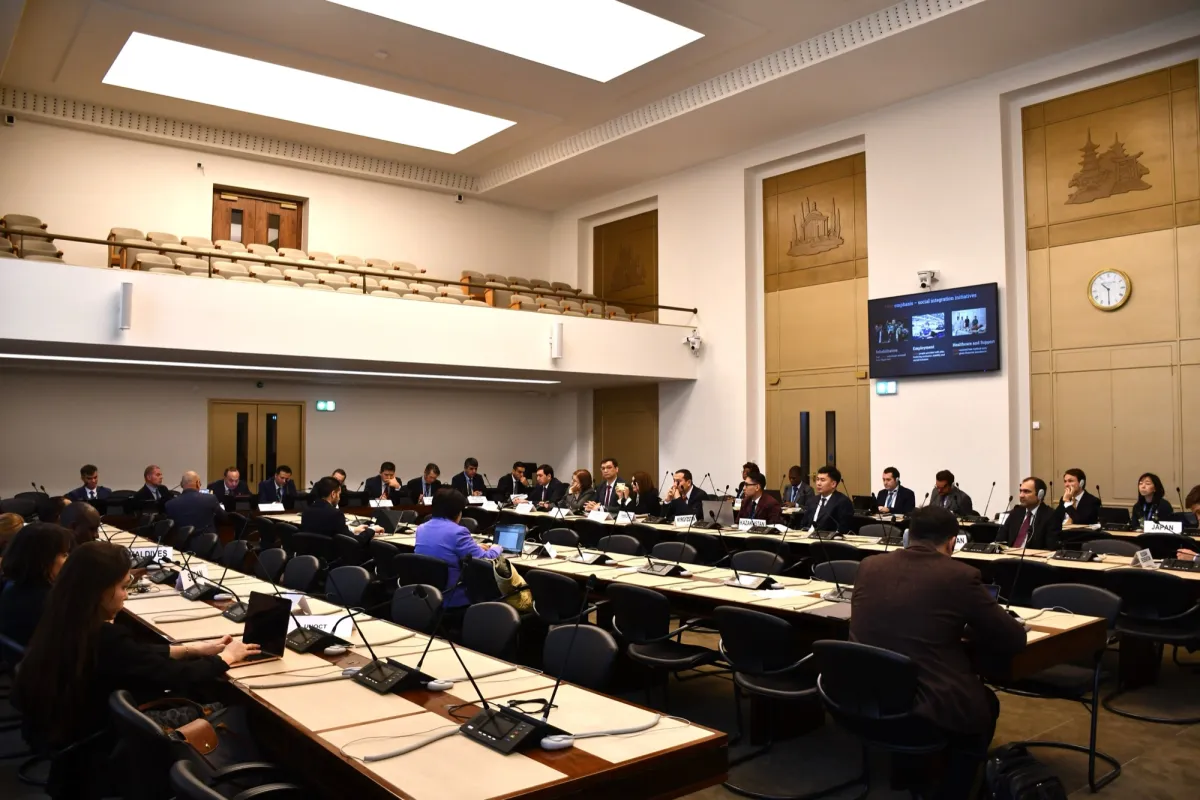
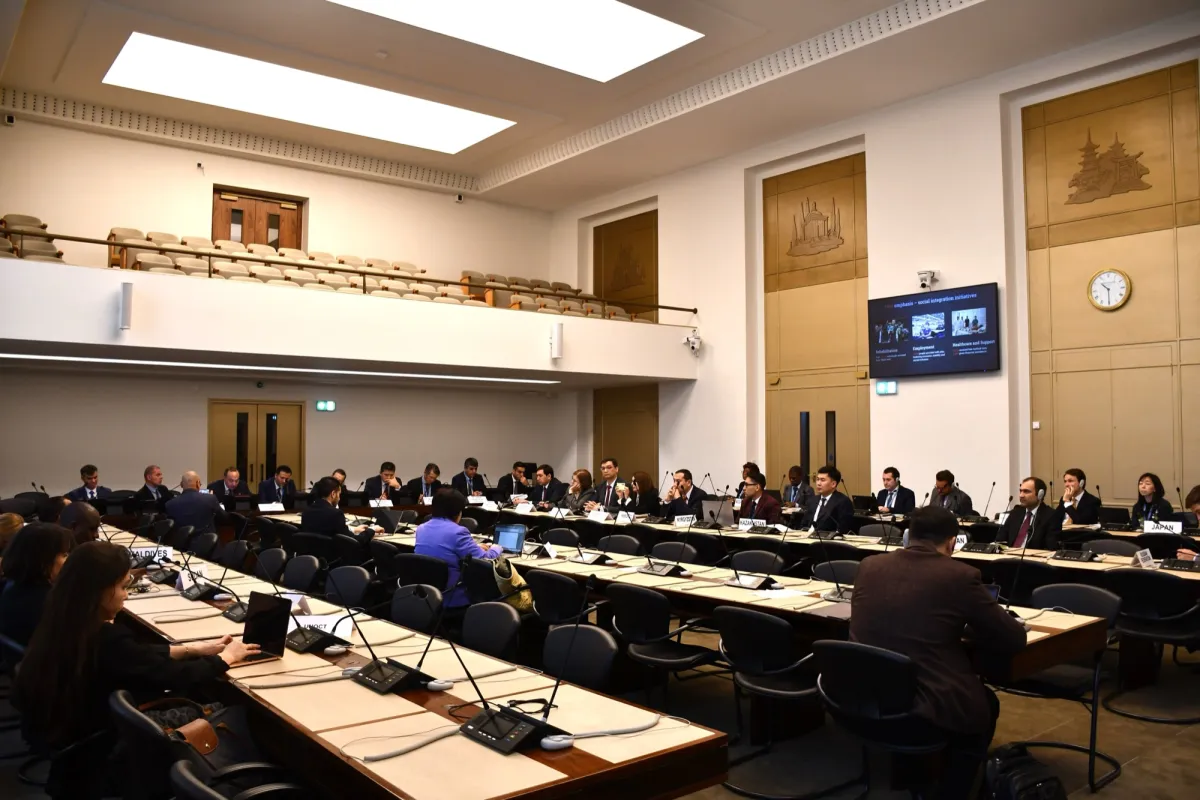
The Global Community Engagement and Resilience Fund (GCERF) today confirmed a new agreement for cooperation with the Government of Uzbekistan at a thought-leadership event at the UN Palais des Nations…
Read story → -
Report
Civil Society's Approach to Rehabilitation and Reintegration…
This guide provides practitioners a holistic overview of the case management-based approach.
Read report → -
Report
Guidance Note on Supporting Community-Based Reintegration of…
This note will assist in designing, negotiating and managing support to reintegration processes.
Read report → -
Report
Factsheet: Rehabilitation and Reintegration of Former…
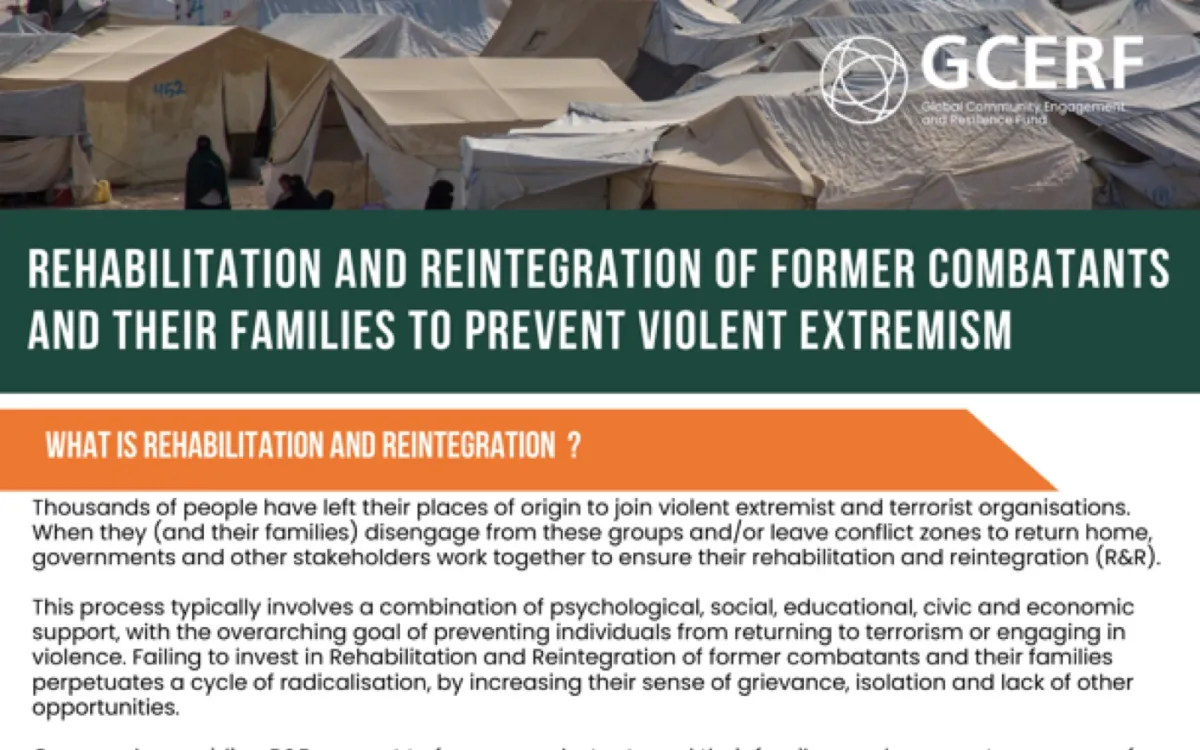
Thousands of people have left their places of origin to join violent extremist and terrorist organisations. When they (and their families) disengage from these groups and/or leave conflict zones to return home, governments and other stakeholders work together to ensure their rehabilitation and reintegration (R&R).
Read report → -
Press release
Rehabilitation and Reintegration Critical to Global Efforts…
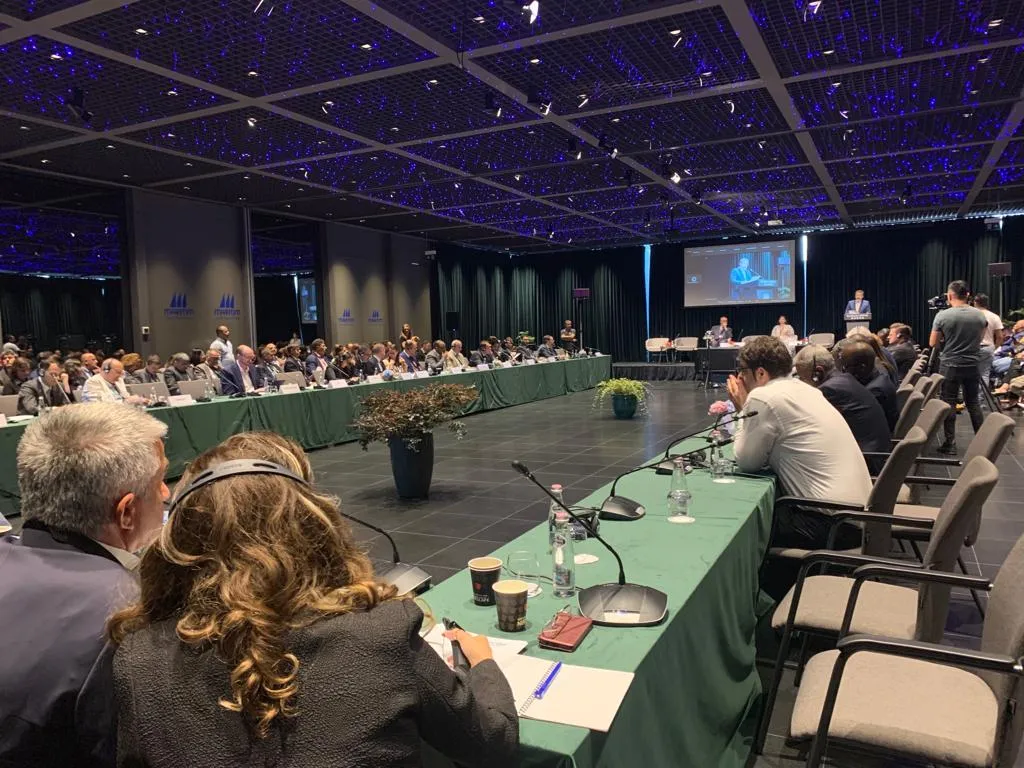
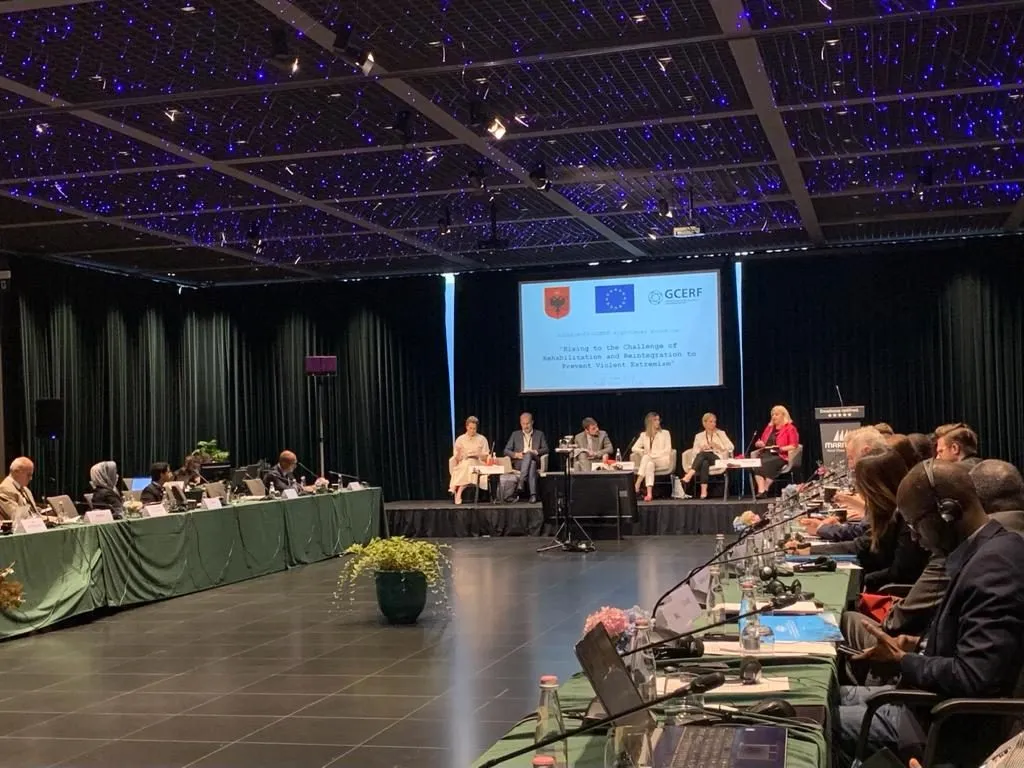
Rehabilitation and reintegration is critical to international efforts to prevent violent extremism, panellists at a global conference on violent extremism will say today. The high-level conference, co-organised by the Government of Albania, the European Union and the Global Community Engagement and Resilience Fund (GCERF), will focus on the need to rehabilitate and reintegrate returnees from conflicts abroad, including their families.
Read story → -
Story
Rediscovering Childhood in Albania After Camps in Syria
At the concert to mark children’s day in a small city outside Tirana, Albania, there was nothing to mark the 6 year-old out from her peers as they danced to bright music in the school auditorium.
Read story → -
Story
Counselling children returning from conflicts abroad: A…
A.T.* is a clinical psychologist who counsels families returning to Albania from conflict zones, particularly from refugee camps in northeast Syria. A clinical psychologist by training, her role is to work with children at a receiving centre where they arrive with their family members.
Read story → -
Story
Reintegration and resocialisation: one mother’s reflections
Zara*, a 31-year-old mother of five seems happy to meet. She says she used to be shy and uncomfortable around new people, but now that has changed. For the past year, Zara has been part of GCERF-funded activities in Kosovo organised by the Community Development Fund (CDF) Consortium and with coordination and support from the Ministry of Internal Affairs. CDF Consortium activities focus on community-based rehabilitation, reintegration, and resocialisation (RRR) of returnees from conflicts abroad and their families.
Read story → -
Story
“This is the first time I see hope”: Healing in the prisons…
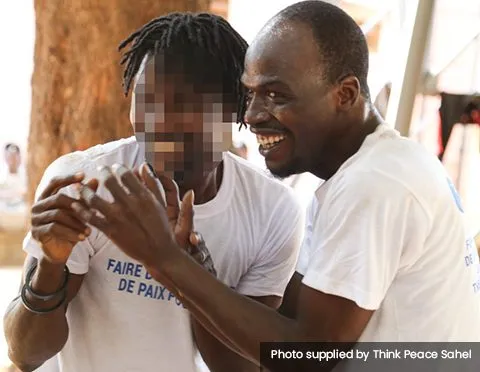
Seeing Ousmane Koné dance, controlling his movements with the grace of a bird, there’s little to hint at the hardship the 29 year-old has overcome.
Read story → -
Story
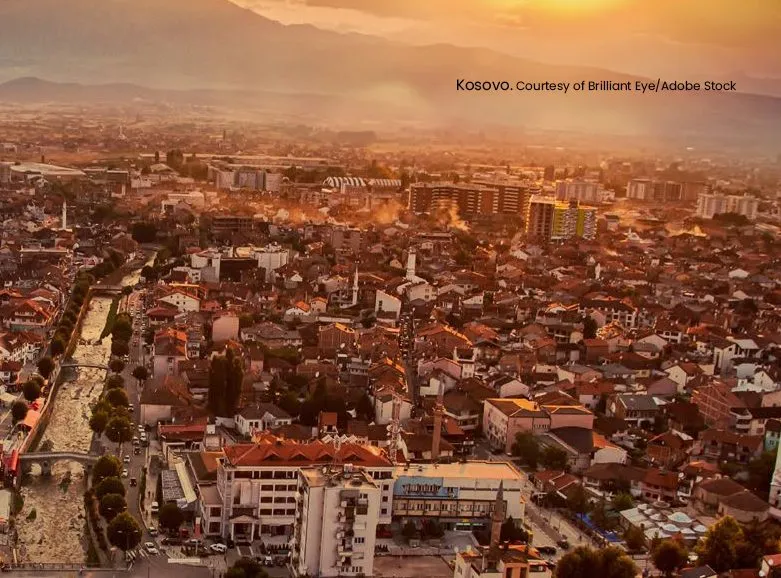
Kosovo
The reporter for the Balkan Investigative Reporting Network was awarded an annual award for a series of articles she wrote on the children of returned foreign terrorist fighters who had travelled abroad to join ISIS.
Read story → -
Story
Bangladesh
Artist Sahan Islam,* 25, never imagined that he would be celebrated among his peers at Dhaka University. The Masters of Fine Arts student in the department of drawing, had never felt completely at home in his own skin. The art camp, funded by GCERF, was an opportunity to change that. His acrylic painting of a sombre figure against a backdrop of peacock feathers won first place in an art prize open to 180 participants, across seven different institutes in Bangladesh.
Read story →
Explore more
-
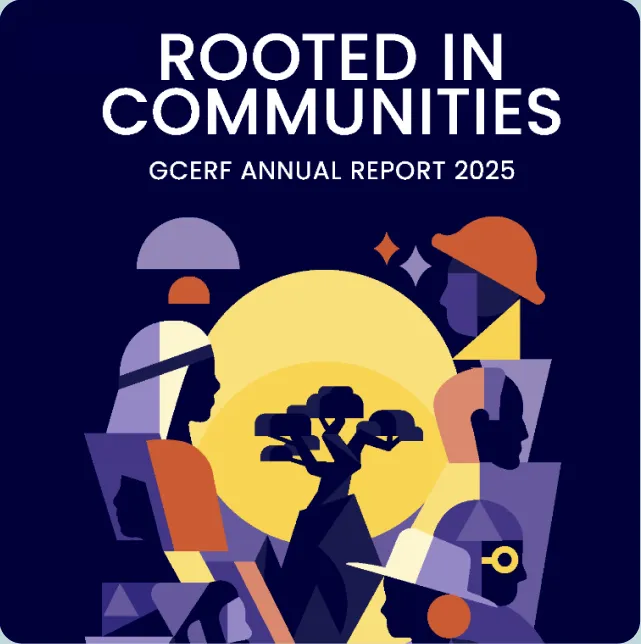
Annual report
Rooted in communities
Our most recent annual report documents GCERF’s results, investments, and impact across all countries and programmes in 2025.
Read report → -
Podcast
Learning, Earning and Belonging: Pathways to Reintegration
In this episode of Turning Points, host Basile Ema Ebede, GCERF’s Regional Manager for South-East Asia, is joined by Aisah Ponce Macabuat, Project Manager at ECOWEB Philippines, to explore how education, vocational training and livelihood development can support rehabilitation and reintegration.
Listen to episode → -
Report
Mental Health and Psychosocial Support in Rehabilitation and…
Recommendations on integrating MHPSS into R&R programmes, drawing on country-level experiences and practical lessons.
Read report → -
Podcast
The Role of Faith Leaders and Youth in Deradicalisation and…
Faith leaders can be among the most trusted people in a community. But what happens when that trust is brought into the work of rehabilitation and reintegration? In this episode of Turning Points, host Samhita Ayaluri explores how faith leaders and youth actors can contribute to preventing violent extremism, and building stronger, more resilient communities.
Listen to episode → -
Story
From Football Fields to Safe Spaces: Building Youth…
In Garbatulla Sub-County, Isiolo, at-risk youth once had nowhere to turn – No structured support to protect them from the pull of violent extremism. That began to change when RPPL’s GCERF-supported SIRR programme found a powerful ally in Abduba, a respected youth leader and chairperson of the local football federation.
Read story →