I climbed in and out of our van to pass through the eight checkpoints that led to Al Hol, the notorious camp where women and children associated with the deadliest terror group, ISIS, are detained. The environment is unkind. It is situated in a stone desert far from any bigger urban settlement. The landscape is occasionally dotted with oil pumps and has no vegetation. At 11 AM, the temperature soars to 52 degrees Celsius, no shade, just dust and blazing sun.
The many kilometres-long white-blue fence appears from far. I notice the first women who are covered head to toe, including gloves, thick black abayas, and full-face veils, battling with the elements of Mother Nature. It is hard to breathe, and dust fills our lungs as we descend to meet the camp administration. Few know, but in Syrian Kurdistan, civil servant leadership positions are shared between men and women, and as such, they co-lead. Clearly, they take gender equity seriously.
The repatriation of the Iraqis is going well. The 29th convoy left the camp last week, but still 12,000 people remain out of the thirty thousand who were previously occupying tents. The remnants of the structures are visible. The camp is shrinking, and the camp administration is reorganising the section.
Jilan, the female co-leader of the camp, a humble civil servant who herself has been displaced, speaks to us calmly but with authority. The biggest problem for them is in the annex, which is occupied by the foreigners. More than 6,500 women and children are present from 52 nationalities. Hardly any repatriation took place in 2025. They are the most radicalized. Humanitarian workers can no longer enter the areas where they live. Ten days earlier, they tried to kill their fellow ‘sister’ from Russia with a weapon that was fabricated by them.
Gender-based violence, misuse of young boys to impregnate women to uphold the bloodline of the caliphate, and the radicalisation of the ‘cubs’ is ongoing. Last week, they burned down three of the humanitarian offices that provided education and protection for their children. They are angry and highly violent.
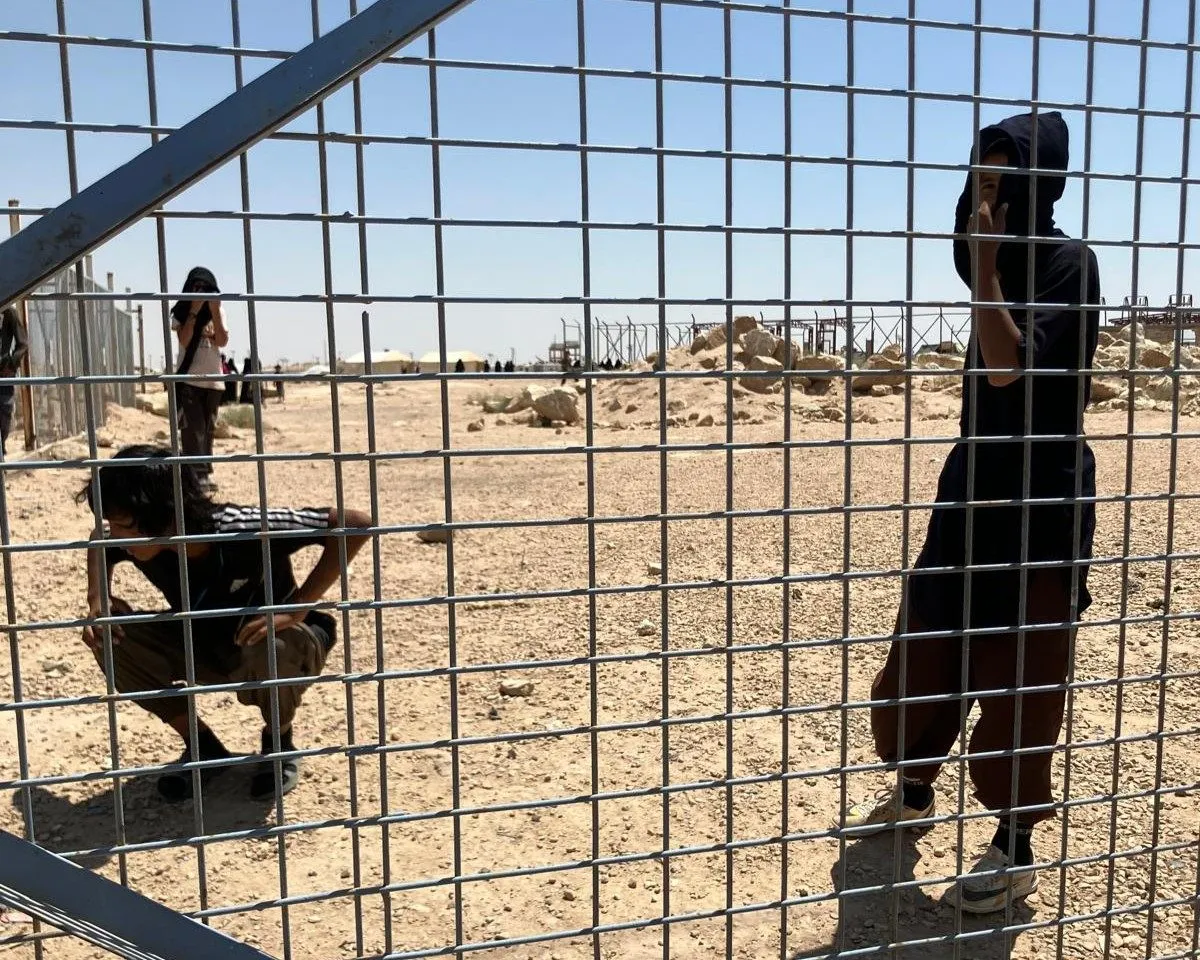
As we approach their annex, young boys pick up some stones and are ready to throw them at us. They look ferocious. The female Kurdish guard shouts at them, so they back off. We have no appetite to enter and get stoned, so we linger around the ‘service area’, where a hospital provides basic health services and the distribution of items happens. The children look like they are from Central Asia, China and Europe. Eyeing us up from the other side of the fence. A brave Tajik boy nears us and says he was born here. He is friends with a much shyer Kazakh boy, yet pushes him against the fence with such vehemence that a proper adult man could hardly remain standing.