“This is the first time I see hope”: Healing in the prisons of Mali
By Sai Aashirvad Konda and Yuko Narushima
Seeing Ousmane Koné dance, controlling his movements with the grace of a bird, there’s little to hint at the hardship the 29 year-old has overcome.
Now, a professional dancer training inmates at the Bamako Central Prison in Mali, he draws on his past to encourage a new crop of artists.
Like many of the prisoners, Koné was living on the streets. At 13, he had left a difficult homelife and spent the subsequent 10 years feeling lost – sheltered in a home for talented children but never quite finding his place. Eventually, he was jailed for possession of cannabis.
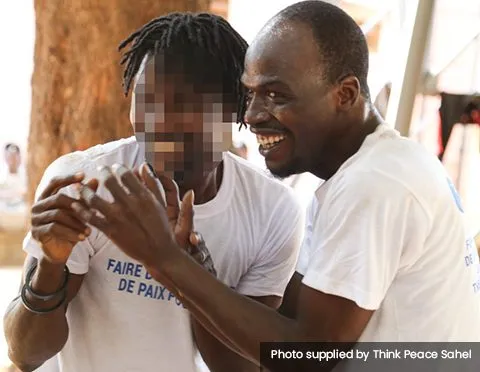
But for Koné, prison was a new beginning. He reawakened his love of dance through a programme delivered by the local NGO, Think Peace Sahel, which GCERF now funds to teach creative arts to prevent violent extremism and aid rehabilitation.
Dr Lilla Schumicky-Logan, Head of Portfolio Management at GCERF, and Moctar Kané, GCERF’s Country Manager for Sahel and Somalia met Koné on a recent visit to two prisons in Mali where GCERF funds programming.
Dr Schumicky-Logan said many inmates had experienced homelessness. “When they come out they have nowhere to go back except to be on the streets,” she said.
Assessments show that prisoners out of jail without a strong network, family or a job are highly vulnerable to be involved in illegal activities. Extremists, living in cramped conditions alongside petty criminals, can exploit these vulnerabilities and use prisons as a place to recruit, she said.