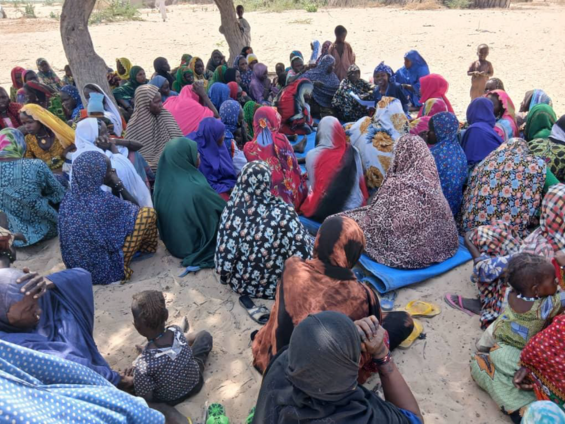
Women Advancing Peaceful Change in Lake Chad Region
Location
Lake Chad Region, Chad
Focus
Mediation
IMplemented by
Ligue Tchadienne des Droits de l’Homme (LTDH)
In Lake Chad’s region, a GCERF-supported project implemented by a local CSO consortium led by Ligue Tchadienne des Droits de l’Homme (LTDH) strengthened women’s participation in local governance by creating opportunities for dialogue, advocacy, and constructive engagement with authorities.
“Halima” (name changed) is in her mid‑thirties and lives in a lakeside commune in Lake Chad’s region, an area affected by insecurity and limited access to livelihoods.
For years, her household relied on small informal trading activities, offering little stability and no space for engagement in local decision‑making. Like many women in the area, economic precariousness and exclusion from governance processes increased frustration and mistrust towards institutions—conditions often exploited by violent extremist groups.
Through one of GCERF‑supported projects implemented by a local CSO consortium, Halima was selected to take part in activities specifically designed to strengthen women’s participation in local governance. In March 2026, she participated in an advocacy and dialogue session with municipal authorities, following targeted coaching on non‑violent communication.
During this programme‑led forum, she raised concrete issues affecting women’s access to land and livelihoods. The exchange resulted in a formal agreement between women’s groups and the municipal council to address these concerns through recognised coordination mechanisms, reinforcing lawful civic engagement as an alternative to grievance‑based or violent pathways.
As a result of this exchange, an agreement was reached between women’s groups and the municipal council to address these issues through formal coordination mechanisms. For Halima, this marked a shift from disengagement to constructive civic participation.
Before, we stayed silent and felt ignored. Through dialogue, we understood that peaceful engagement can bring change.”
— Halima, Activity Participant
By strengthening women’s voices and trust in local institutions, the programme reduced vulnerabilities linked to grievance and exclusion, contributing to the prevention of violent extremism and reinforcing community resilience.
Stay Connected
Subscribe to our newsletter
Get updates on GCERF’s work, country programmes, impact stories and new publications directly in your inbox.