
SAHEL REGION

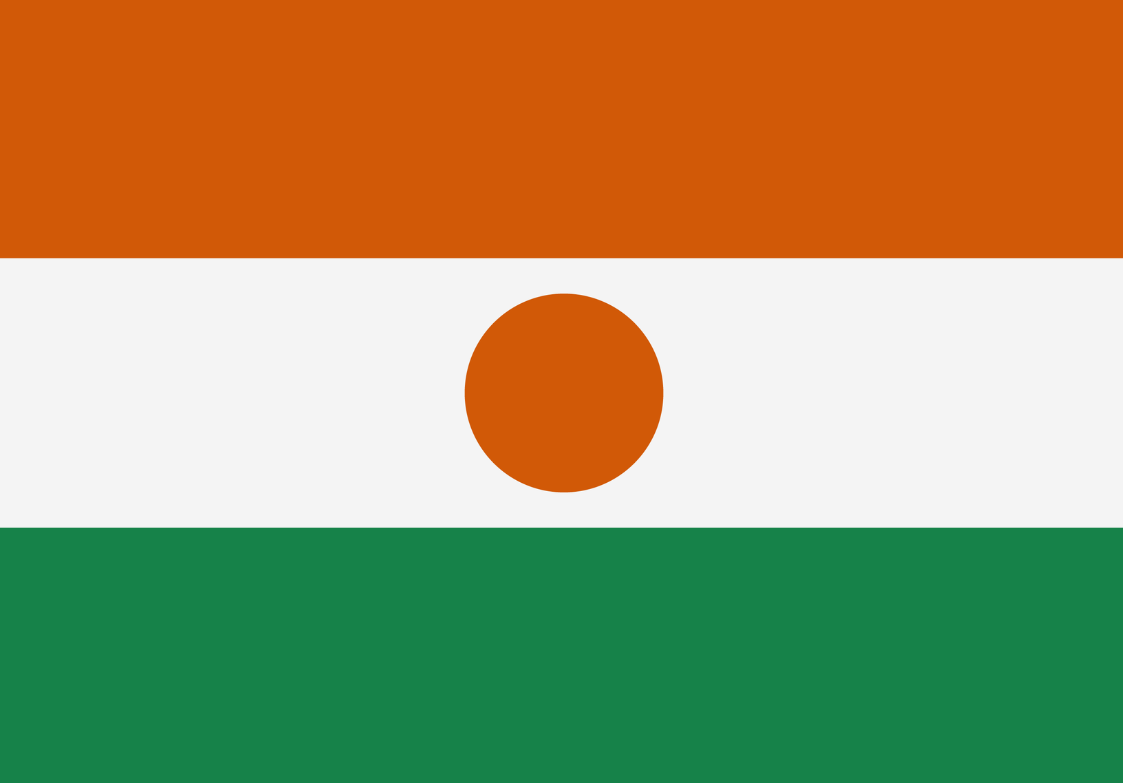
NIGER

The threat of terrorism and violent extremism have worsened in recent decades, become increasingly pronounced in the Central Sahel region of Burkina Faso, Chad, Mali, Mauritania and Niger. The security challenges inherent in the sub-regional context, resulting from the increase in asymmetric threats and their various forms of manifestation as well as the outbreak of social tensions, have resulted in the advent of transitional regimes in the three countries of the Central Sahel and the creation of the Alliance of Sahel States (AES) in 2023. Niger became a GCERF partner country in 2021. To date, GCERF has invested USD 5.5 million in the country, with active grants worth USD 2.5 million currently supporting three local civil society organisation (CSO), Diko, EPAD and Hope Sahel.

Background & Context

Understanding Violent
Extremism in Niger

The threat of terrorism and violent extremism has intensified in recent decades, becoming particularly acute in the Central Sahel region, which includes Burkina Faso, Chad, Mali, Mauritania, and Niger. The region’s complex security environment—shaped by the rise of asymmetric threats, their diverse manifestations, and escalating social tensions—has contributed to the emergence of transitional governments in three Central Sahel countries, as well as the establishment of the Alliance of Sahel States (AES) in 2023.

Niger has been a partner country of the Global Community Engagement and Resilience Fund since 2021. To date, GCERF has invested USD 5.5 million in the country, with active grants totaling USD 2.5 million currently supporting three local civil society organisations (CSOs): Diko, EPAD, and Hope Sahel.

GCERF'S UNIQUE INVESTMENT MODEL

Country
Support Mechanism

GCERF pioneers a unique model of investment designed to promote a whole-of-society approach and ensure the sustainability of our programmes. Under this model, in each partner country, we support national governments in establishing a steering committee called the Country Support Mechanism (CSM).

GCERF in Niger is working with the government, through the country support mechanism, and bilateral and multilateral donors to ensure a coordinated approach to prevention. GCERF works with the Nigerien government to support the implementation of its national action plan and invests in local organisations that design and run programmes contributing to stability and resilience.

Key Drivers of Violent Extremism
High levels of youth employment

Limited access to stable employment and livelihood opportunities leaves many young people economically vulnerable and socially marginalised, particularly in rural and conflict-affected areas. In contexts where state presence and public services are weak, extremist groups often exploit these frustrations.

Recurrent farmer-herder conflicts

Competition over increasingly scarce natural resources—particularly land, water, and grazing areas—has intensified due to population growth, climate change, and environmental degradation. In the absence of effective conflict-resolution mechanisms and adequate state presence, local disputes can quickly escalate into violent confrontations. Extremist groups often exploit these tensions.

Longstanding governance-related grievances

For decades, many communities have experienced a deep sense of marginalisation, fuelled by weak state presence, limited access to basic public services, corruption, and low levels of trust in national and local institutions. This has undermined the social contract between citizens and the state. Extremist groups frequently exploit these grievances.

Results at a Glance

Key Results

Total amount invested (USD)
$ 0 M+
Grants
0
Civil society organisations
0
Community members engaged through interfaith, intercommunity, intergenerational dialogues to foster solidarity and reject false narratives often used by violent extremist groups
0
Community members reached by prevention campaigns to reduce the risk of recruitment by violent extremist groups
0
Individuals at risk of radicalisation and ex-combatants received livelihood support, strengthening their resilience against the financial incentives used by violent extremist groups to recruit
0
community members trained in conflict resolution or mediation mechanisms to resolve grievances that make them vulnerable to recruitment by violent extremist groups
0

Investment & grant figures updated May 2026 · Programme results updated December 2025

Our Approach

Investment Strategy in Niger

Community trust icon
To contribute to improvements in the social ecology to create conditions conducive to prevention and resilience-building

To facilitate community-led rehabilitation, disengagement, and (re)integration, including people disengaging from criminal, non-state armed, and violent extremist groups
Our IMPLEMENTING PARTNERS

Active Grants in Niger

Current Grants 3 Active
01 ONG Diko
Grant Overview
Amount
USD 825’000
Duration
Jan 2026 – Dec 2027

Implementing Partners
Principal Recipient
ONG Diko (DIKO)
Sub-Recipients
Action Dev Niger

Programme Objectives
1
Support survivors of violence, internally displaced persons, and former combatants in sustainable reintegration into society through holistic care that strengthens their resilience, autonomy, and socio-economic inclusion.
2
Promote safe, inclusive, and resilient environments for conflict-affected communities, including survivors, internally displaced persons (IDPs), and host populations, to strengthen community protection and contribute to the prevention of violent extremism.

Areas of Implementation
Tillabery Dosso
02 Ecole – Parrainage & Actions de Développement
Grant Overview
Amount
USD 727’000
Duration
Jan 2026 – Dec 2027

Implementing Partners
Principal Recipient
Ecole – Parrainage & Actions de Développement (EPAD)
Sub-Recipients
Association des Enfants et jeunes travailleurs du Niger (AEJTN)
Association Vision et bien être des Enfants et Jeunes (AVBEJ)

Programme Objectives
1
Expand young people’s sustainable access to local economic opportunities in promising sectors, thereby strengthening their empowerment, supporting the socioeconomic stability of communities, and reducing their vulnerability to extremism.
2
Strengthen participatory governance mechanisms that enable harmonious coexistence between communities (young people, IDPs, and host populations) and foster constructive collaboration with local authorities and the FDS, thereby consolidating peace and community resilience.

Areas of Implementation
Tillabery Dosso
03 Hope Sahel
Grant Overview
Amount
USD 1’011’000
Duration
Jan 2026 – Dec 2027

Implementing Partners
Principal Recipient
Hope Sahel (HS)
Sub-Recipients
Jeunesse, Action et Leadership (JAL)
Association des Chefs Traditionnels, Coutumiers et Religieux du Liptako-Gourma (ACTR-LG)

Programme Objectives
1
EEnable young talibés to acquire technical skills and access socioeconomic opportunities.
2
Provide young prisoners with technical skills and psychosocial support to facilitate their socioeconomic reintegration.
2
Strengthen communities’ capacity for dialogue, mediation, and prevention to consolidate social cohesion and prevent violent extremism.

Areas of Implementation
Tillabery Dosso
Stay Connected

Subscribe to our newsletter

Get updates on GCERF’s work, country programmes, impact stories and new publications directly in your inbox.
You can update your preferences or unsubscribe at any time.