
From Surrender to School: Sourbadjo’s Story
From Surrender to School: Sourbadjo’s Story
From Surrender to School:
Sourbadjo's Story
Location
Tillabéri Region, Niger
Focus
Reintegration
IMplemented by
Garkua
In 2023, GCERF launched the PAISRSIP project in Niger to support the demobilisation and reintegration of former members of non-state armed groups and their families — turning surrender into a pathway for education, livelihoods, and renewed hope.
Implemented by local partner NGO Garkua, the project combined legal screening, psychosocial care, livelihoods assistance, civil rehabilitation and support for children’s education to address the root causes of violent extremism.
The Nigerien authorities had launched a call in 2021 for the general surrender of combatants from non-state armed groups in exchange for amnesty and support for socio-economic reintegration. Following this call, GCERF and other partners in Niger were asked by the national authorities to support this process through the financing of promising initiatives and projects.
This is how Hardo, an ex-combatant, surrendered with his wife and two children, including Sourbadjo, then five years old. Like many other repentants, he was initially doubtful about the amnesty programme.
Authorities and development projects make commitments and promises they never fulfil.”
— Hardo, ex-combatant and father of Sourbadjo
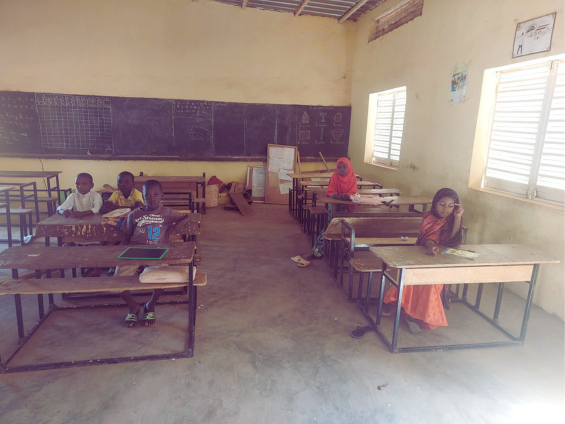
Through PAISRSIP, Hardo received support to open a small grocery business, helping to stabilise his family’s income. At the same time, Sourbadjo, his daughter, was enrolled in primary school in Niamey and provided with a school kit and a monthly allowance.
The transition for Sourbadjo was not easy. She lacked a school model at home — neither her father nor her mother had studied. Her father, now occupied with his grocery business, could not accompany her each day.
She would not return to class after break time and would always isolate herself. It was clear she was struggling to integrate.
— Sourbadjo’s teacher
Recognising the risk of marginalisation — a known driver of vulnerability to violent extremism — the project introduced home tutoring and worked with parents to encourage stronger engagement in their children’s education. This tailored support made a real difference.
Sourbadjo is now more motivated and better integrated into the class. She has made new friends, smiles, sings, and plays alongside her classmates.
— Sourbadjo’s teacher
She is now progressing both academically and socially. Her father, once deeply sceptical, has become an advocate for peace.
The positive impact of this project on my family — on my daughter Sourbadjo and on myself — has convinced me to become more actively involved in promoting peace and combating extremism. I have come to understand that it is possible to live free from fear and uncertainty.
— Hardo
Sourbadjo’s journey shows that effective prevention of violent extremism requires more than disengagement for ex-combatants. By adapting support to the diverse needs of families — from livelihoods to education and social inclusion — the PAISRSIP project has helped turn surrender into sustainable reintegration and renewed hope.