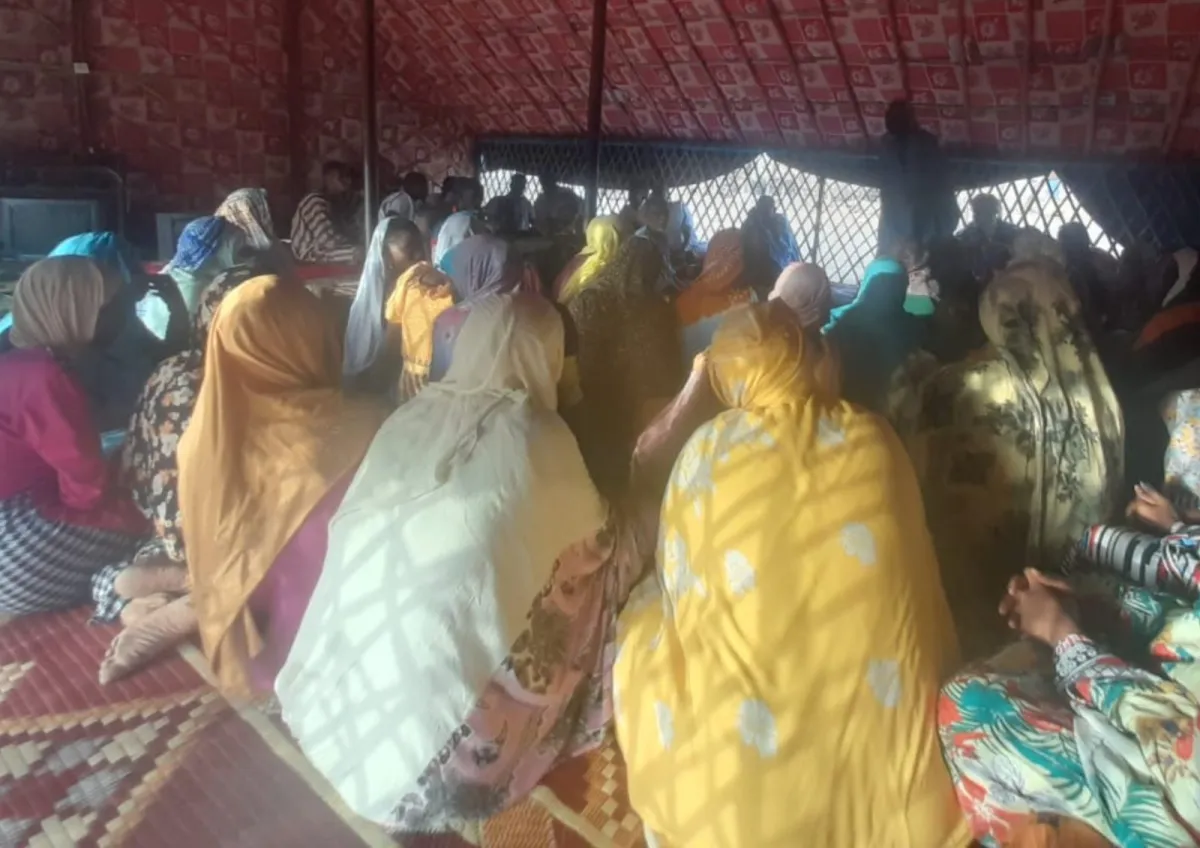
Mariam, 25, lives in the village of Diogountourou, in the Khabou department, Mauritania. After leaving school early and experiencing a short-lived marriage, Mariam returned to live with her parents, uncertain about her future.
“In my village, there are few opportunities,” Mariam recalls. “I saw so many young people like me with no prospects. We felt forgotten.”
This sense of stagnation and hopelessness, particularly among youth, is one of the many risk factors that can make communities vulnerable to the influence of violent extremist ideologies. In fragile environments where opportunity is scarce, efforts in the prevention of violent extremism (PVE) must address not only security, but also dignity, livelihoods and belonging.
Mariam’s turning point came when she joined a vocational training programme in fabric dyeing, supported through a broader PVE initiative to promote youth empowerment.
“When I started the dyeing training, it felt like a new world had opened to me. Every day, I learned something, from handling fabrics to sewing clothes before dyeing them. There were also workshops on financing mechanisms and promising income-generating opportunities for young people.”
These sessions were part of an integrated approach to PVE that focuses on economic empowerment, community resilience and personal development. Through this experience, Mariam not only learned a trade, but also rediscovered her sense of purpose and self-worth.