- 300+ Frontline workers (MHPSS service providers, social workers, teachers, local institution officials) trained to enhance preparedness and strengthen capacity to support returnees
- 500+ Returnee women and young people at-risk of radicalisation equipped with vocational skills and entrepreneurship support to facilitate sustainable reintegration into communities
- 6,500+ Returnee children supported with direct services (education, legal, psychological) to facilitate their effective reintegration into the communities
Dream Organization
Where they work
$7M Investment funds
- Grants
- 8
- Civil society organisations
- 13
$900K Investment funds
- Grants
- 1
- Civil society organisations
- 1
- 350+ TCNs identified and engaged in pre-departure support activities to return to their home country
- 160+ TCNs (children) attended and completed sessions on childcare and early childhood development
- 80+ Children and youth received educational support
-
Story
Amal’s Journey of Resilience and Independence
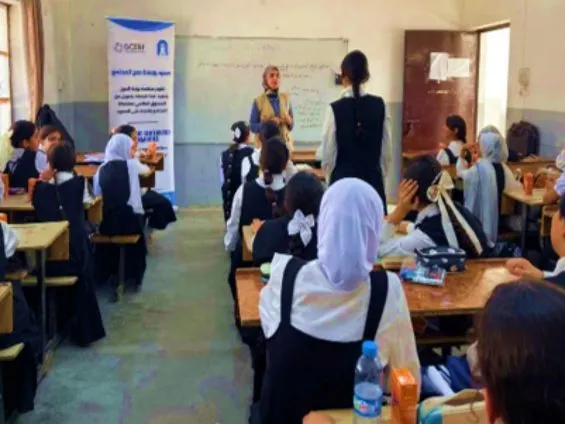
In early 2026, GCERF, through its partner Dream Organisation, supported a sewing vocational training programme in Anbar for people returning after years of displacement and uncertainty. The programme equips participants with practical skills to build small, sustainable businesses from home, turning hardship into hope and helping rebuild a more stable future for themselves and their families.
Read story → -
Podcast
The Legal Path Home: International Law and The Challenges of…
Before rehabilitation and reintegration can begin, there is a fundamental question: who has the right to return? In this episode of Turning Points, host Basile Ema Ebede, GCERF’s Regional Manager, is joined by Aoife Devlin, a law and politics graduate from University College Dublin. Together they examine the legal challenges surrounding the repatriation of ‘foreign terrorist fighters’ and their families from Northeast Syria — exploring the role of international law, citizenship, and state responsibility.
Listen to episode → -
Story
A Child’s Path to Recovery: Aran’s Story
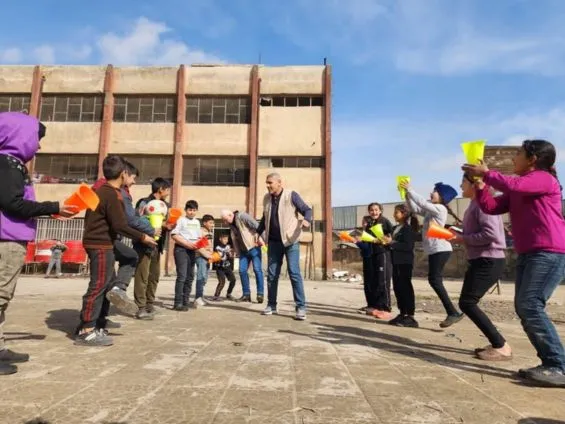
In Northeast Syria, GCERF’s investment partner, Salam for Hope Foundation, mobilised its team and resources as part of an emergency response to the mass displacement of people from conflict-affected areas in Aleppo, Raqqa, and Deir ez-Zor. The response also worked to strengthen local communities in preparation for future reintegration cases — reflecting GCERF’s whole-of-society approach to Preventing Violent Extremism (PVE).
Read story → -
Story
Zainab’s Journey: From Trauma to Determination
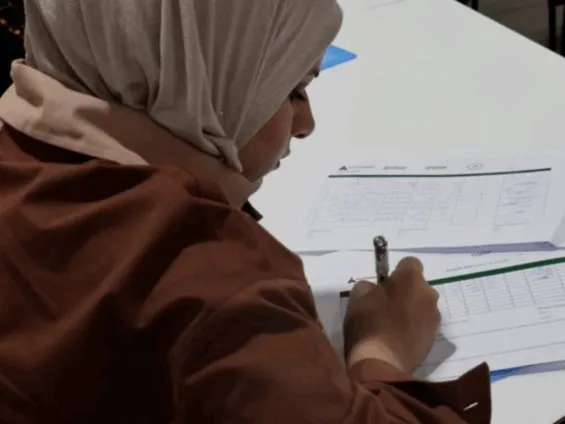
Through its Mental Health and Psychosocial Support (MHPSS) programme in Iraq, IID, with GCERF’s support, accompanied Zainab’s journey from displacement and exclusion toward healing and opportunity — helping her overcome trauma, return to formal education after an 11 year interruption, and reclaim her dream of becoming a doctor.
Read story → -
Podcast
The Journey Before the Journey
In this episode, GCERF's Mona El-Wali is joined by Kim Saado, GCERF's National Advisor for Syria, and Jeyana Ahmad, Programme Manager at Salam for Hope Foundation, GCERF's implementing civil society partner in Syria, to explore a critical and often unseen moment in the rehabilitation and reintegration process: the time before a family leaves a camp in northeast Syria. They discuss what pre-departure preparation really means in practice, and the psychological, legal, and practical steps that must happen before return.
Listen to episode → -
Podcast
Rehabilitation and Reintegration in Iraq, Syria, and Yemen —…
In the first episode of Turning Points, GCERF's Lilla Schumicky-Logan, Deputy Executive Director, sits down with Hatem Shatnawi, Regional Manager for Iraq, Syria and Yemen, and Tariq Hasan, National Advisor for Iraq, to discuss what rehabilitation and reintegration really looks like on the ground, the challenges of working in conflict-affected settings, and why community-led approaches are essential.
Listen to episode → -
Le Temps
-
Press release
International Partners Strengthen Uzbekistan’s…
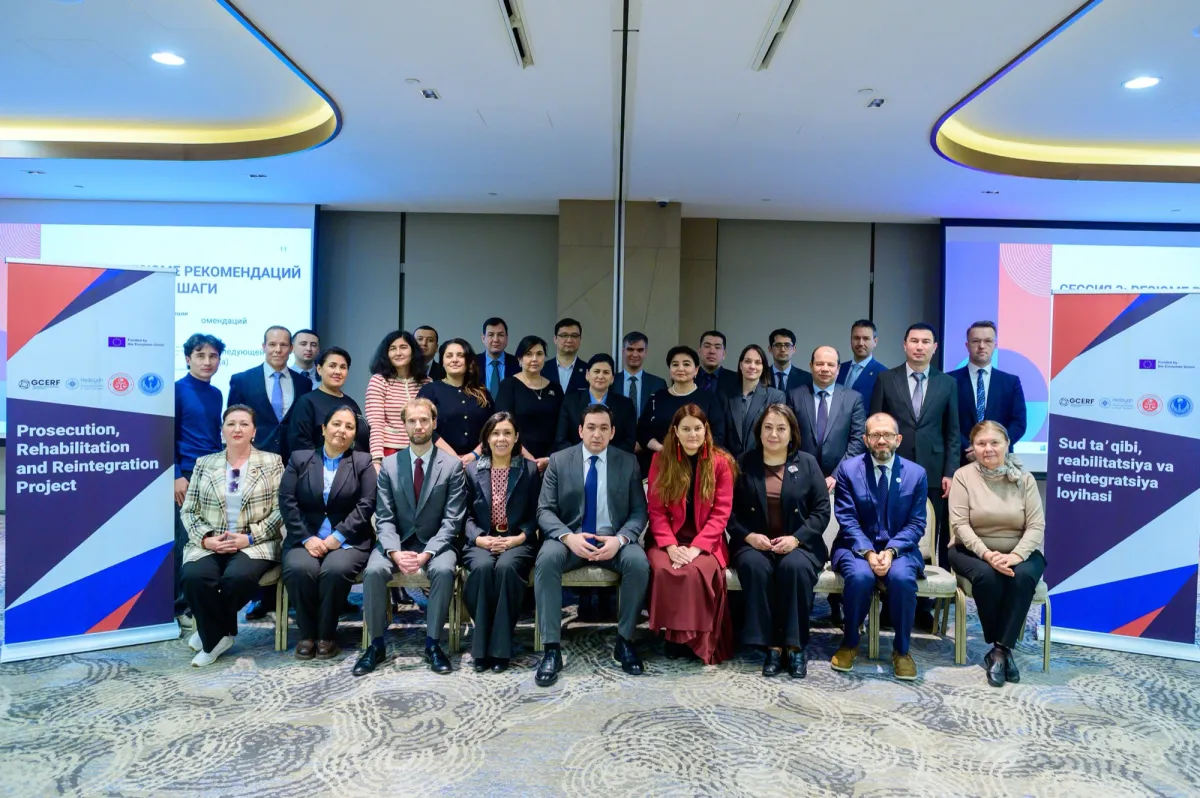
Uzbekistan is strengthening its capacity to safely reintegrate individuals returning from conflict zones, with financial and strategic support from the European Union through its Foreign Policy Instrument (FPI). The three-year Prosecution, Rehabilitation, and Reintegration (PRR) program me focuses on returnees from Iraq and Northeast Syria…
Read story → -
Mondiaal Nieuws (MO*)